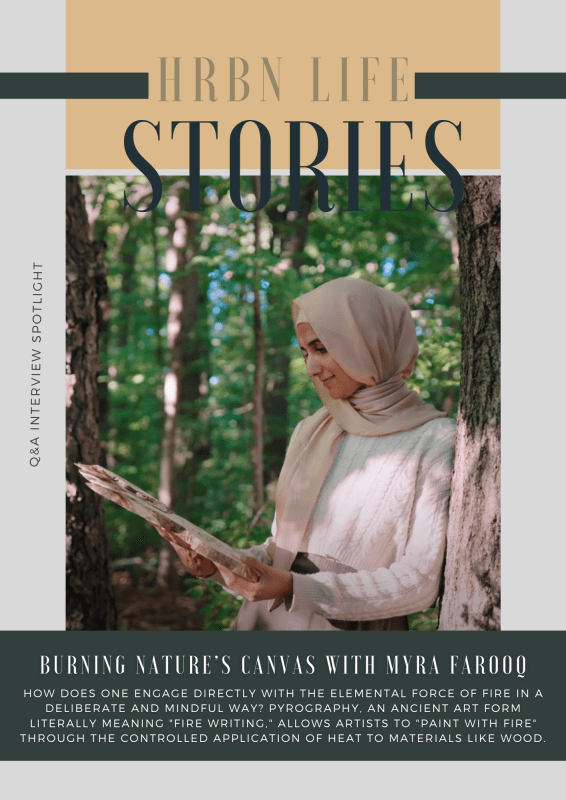
How does one engage directly with the elemental force of fire in a deliberate and mindful way? Pyrography, an ancient art form literally meaning “fire writing,” allows artists to “paint with fire” through the controlled application of heat to materials like wood. This practice taps into the captivating and powerful act of burning, transforming simple materials into art and offering a cathartic and grounding experience.
The act of woodburning transcends mere craft, becoming a powerful tool for meditative practice. Artists often describe the process as one that requires intense focus and presence. Each mark made by the transformative power of fire – turning raw materials into art through heat and light – is irreversible, prompting artists to welcome spontaneity and intuition in their creations. This permanence creates a sense of commitment to each piece, pushing artists to explore their creativity without fear of making mistakes.
HRBN Life Stories speak with Myra Farooq, who was inspired to start creating woodburned art as a way to express her creativity during her time at university. What began as a personal hobby has now transformed itself into a thriving business. Myra walks us through her early woodburning days – noting the smell that was difficult to tolerate until, months later, she discovered “real wood.” The choice of wood is crucial not only for the quality of the artwork but also for the health and safety of the artist.
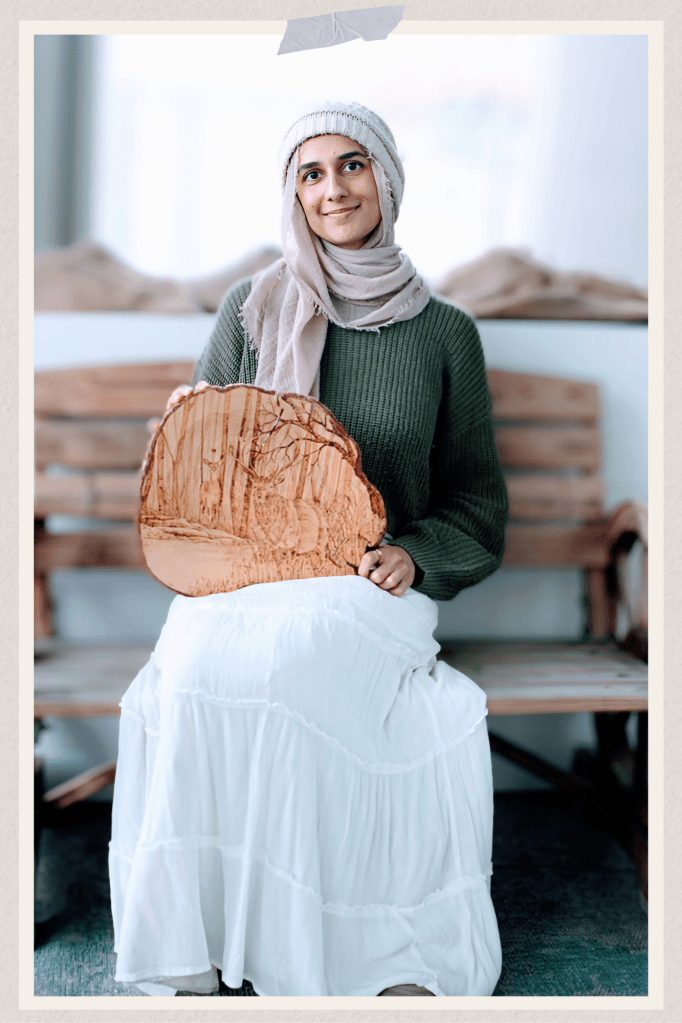
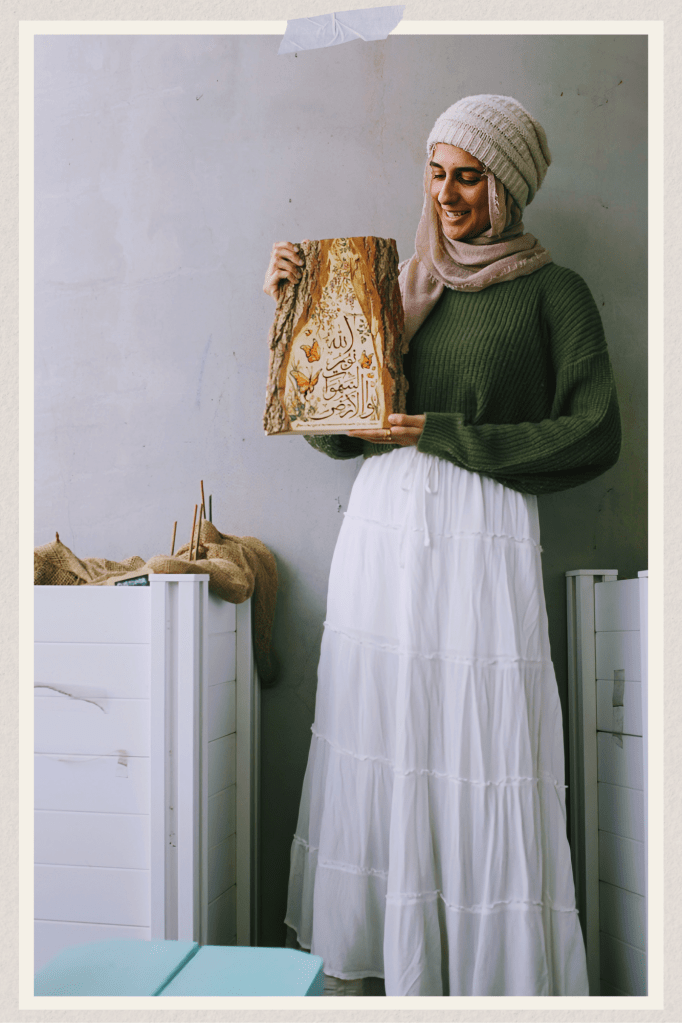
Inspiring to know about Myra Farooq’s work, is just how much her customers often find solace and meaning in her woodburning pieces, which not only reflect their own journeys but also honour the memories of loved ones. Many express how specific quotes or symbols in Myra’s work resonate with them at critical moments, providing comfort or inspiration when they need it most. This connection is further amplified by the emotional responses elicited from recipients of her gifts, particularly when they encounter verses from the Quran that speak directly to their experiences. Such interactions illustrate the impact that thoughtful art can have on individuals’ lives, reinforcing the idea that creativity is not just an expression but a bridge to deeper understanding and connection.
Furthermore, we delve into Myra’s dedication to ethical sourcing which reflects a growing awareness within the art community about the importance of environmental responsibility. Artists like Myra are increasingly recognizing their role in advocating for sustainable practices – ensuring that her woodburning art not only brings beauty but also respects and preserves the environment.
Note: The following Q&A interview with Myra Farooq has been paraphrased for clarity and conciseness.
What inspired you to start creating woodburned art?
Woodburning unexpectedly entered Myra’s life during her third year at university, igniting a passion she never knew existed. Encouraged by friends who found joy in her notebook doodles, she took a leap of faith and created an art Instagram account. What started as a simple platform for sharing her sketches blossomed into a vibrant source of inspiration that transformed her artistic journey.
As Myra immersed herself in the world of Instagram, following countless talented artists, she began to cultivate her own unique style. Her initial doodles evolved into intricate zentangles, which then flourished into elaborate mandalas that reflected both her creativity and dedication.
One particular mandala artist caught Myra’s attention with their innovative use of natural materials. It was through their captivating content that Myra discovered the mesmerizing technique of wood-burning—a practice steeped in history yet entirely new to her at that moment. Watching an artist skillfully burn a mandala onto a beautiful slab of oak left her in awe and sparked a desire to explore this ancient art form herself.
The allure of harnessing heat to craft breathtaking art on reclaimed wood resonated deeply with Myra’s love for the natural world.
I was curious to learn about the emotional and philosophical connection in woodburning art. What I learned is that the act of transforming raw wood into art through burning, known as pyrography, is a journey that intertwines the artist’s identity with the natural world. This process is not merely about creating an image; it is a dialogue between the artist and the medium. Each piece of wood carries its own history, character, and imperfections—knots, grain patterns, and textures—that inform and inspire the artistic direction.
Furthermore, this approach reflects a philosophical stance that values humility and reverence for creation. The belief that divine inspiration plays a role in shaping each design adds another layer to this connection. It suggests that art is not solely an expression of individual creativity but also an acknowledgment of something greater than oneself—a force that guides and influences artistic expression.
What emotional or philosophical connection do you find in the act of transforming raw wood into art through burning, and how does this process shape your identity as an artist?
As Myra puts it, “woodburning is such a beautifully collaborative experience between artist and wood.” She rarely decides on a design before sitting with the wood and seeing what feels right. This spontaneity allows for a deeper connection to emerge, where she becomes attuned to the unique qualities of the wood. The emotional resonance of this practice lies in recognizing that each piece of wood is already a form of art in itself. Myra honours her craft and nature by respecting the inherent beauty of each piece of wood, allowing it to guide the creative process. She never wants to impose her art on the wood and take over it.
Myra firmly believes that her art is also guided by a higher power, and she sees each piece as a reflection of the inspiration she receives from God.
Can you walk me through your writing process for creating the messages on your wood? What inspires you, and how do you ensure that each message resonates with your audience?
Myra’s messages consist of sayings she comes across online or verses from the Quran. She will sometimes search for general verses and quotes and choose what resonates with her personally, rather than focusing solely on what might appeal to her audience. She believes that by prioritizing authenticity, the messages she shares will naturally connect with others. The quotes and verses she chooses typically revolve around themes of nature, empowerment, and spiritual grounding.
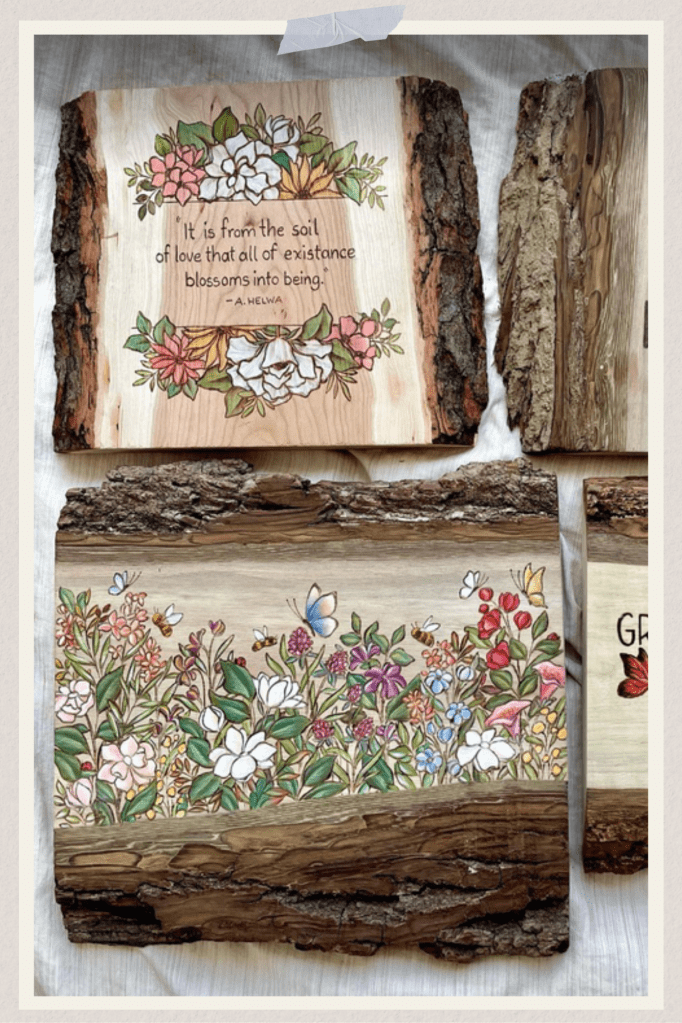
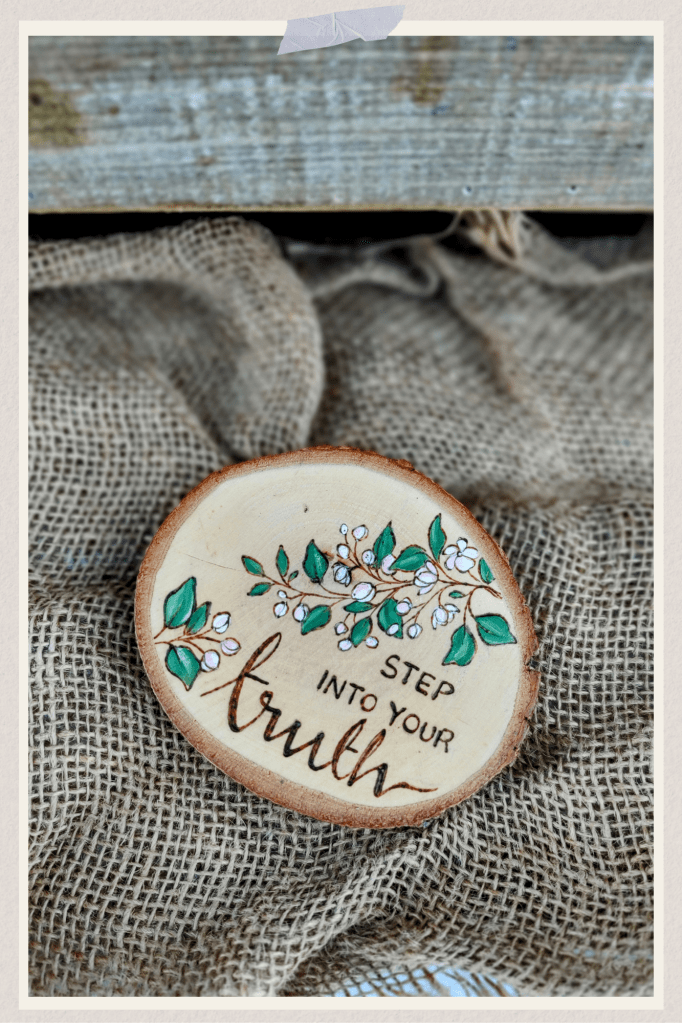
If there was one message or lesson you would want people to take away from your work, what would it be?
The primary message or lesson Myra hopes to convey through her artwork is that true beauty and healing reside within nature. Her art simply aims to honour and celebrate this beauty, which she believes embodies the divine essence of God. Myra expresses, “we share an intrinsic bond with the natural world, and it is where we can find true peace and solace.”
What is the most rewarding feedback you have received from customers regarding your work?
Myra encounters customers at markets who see her pieces and express how a particular quote or phrase is exactly what they needed to see at that moment. Some individuals notice small details, like dragonflies and ladybugs, and share that these are meaningful signs from their departed loved ones.
Working on custom projects has been especially rewarding for Myra, as she can help bring a collaborative vision to life, and seeing the smiles on her customers’ faces when they receive their pieces is the most fulfilling response she could hope for. Myra has also had customers buy pieces as gifts for their loved ones, often recounting how the recipients were moved to tears upon reading a specific verse from the Quran included in the artwork, which perfectly reflects what they are experiencing.
The act of creating art is inherently tied to vulnerability. Can you share a specific moment or experience in your life that significantly shaped your artistic journey and influenced your work at Myra’s Art Studio?
A pivotal moment in Myra’s artistic journey that significantly shaped her work at Myra’s Art Studio, was when she overcame her fear of creating on a large scale. Myra remembers walking into her wood supplier’s lumber store a few years ago and coming across a massive, rustic wood piece about 30 inches wide. Despite her initial hesitation, as she had previously only worked with smaller rounds and signs, she decided to purchase it. The piece, however, sat on a shelf where it remained for months.
Myra associated large pieces like this with ‘true’ artists, and she never felt good enough to create something worthy on that scale. However, the day she started working on it was transformative. Completing that piece was a confidence booster, as it helped Myra realize she was capable of more than she thought. Shortly after, she created another large piece that sold quickly, which gave her the confidence to re-imagine her business and pursue more ambitious, higher-priced, and creatively fulfilling pieces.
Could you walk me through your creative process when starting a new piece?
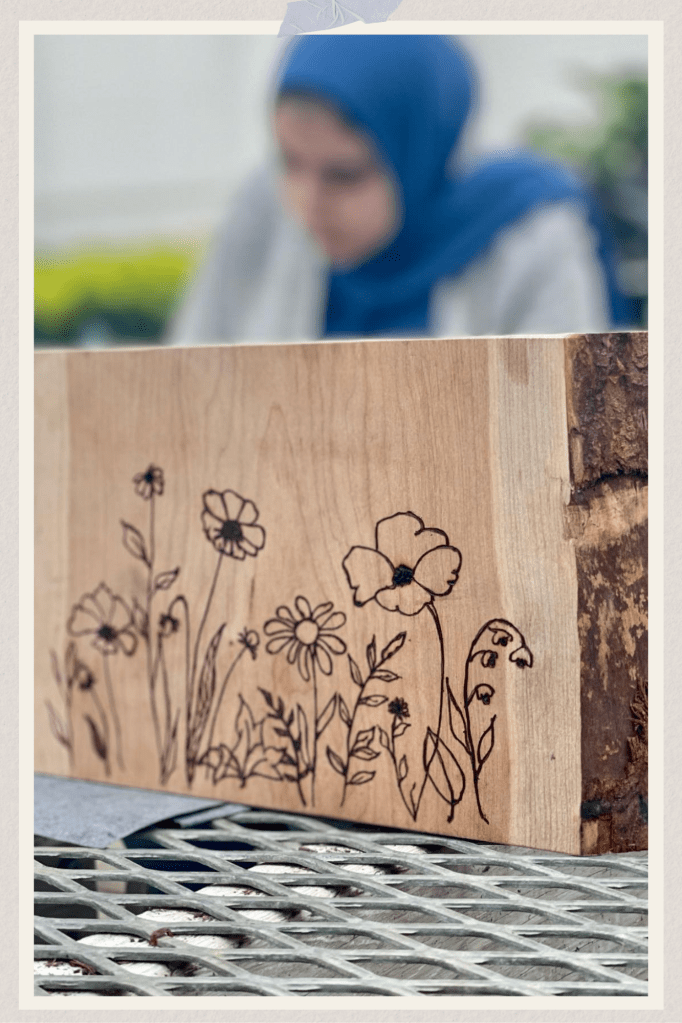
Myra’s creative process varies with each piece. For smaller works, she relies on muscle memory since she often creats similar designs repeatedly. However, for larger, one-of-a-kind pieces, she begins by sitting with the raw wood, observing its character—knots, natural grain patterns, and texture—that guide and inspire her artistic direction. Once she decides on the message she wants to express, which is an intuitive choice, she focuses on the placement of this main message (including calligraphy and font) according to the wood’s shape and burn that into the surface. Myra then sketches out loose floral and bird designs, which she then burns as well. Finally, she starts painting without much pre-planning.
In practice, when Myra begins painting her woodburning pieces without extensive pre-planning, she allows spontaneity to guide her choices – colours organically evolve within each piece.
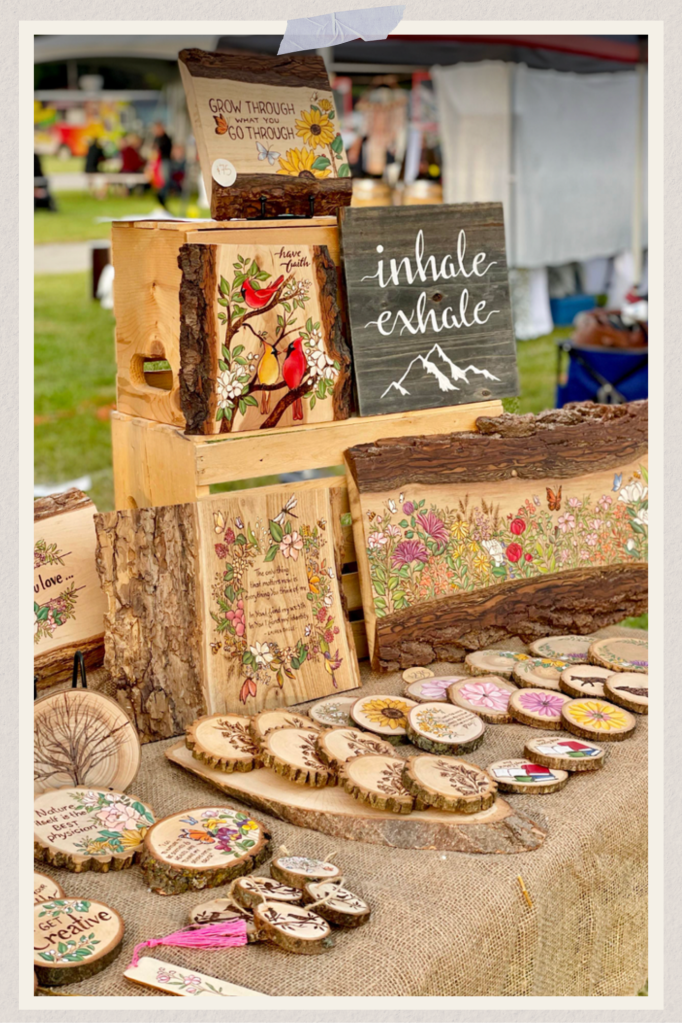
How has your style evolved over the years since you began this craft?
Myra’s style has evolved significantly over the years while maintaining a consistent theme of florals and nature. Her attention to detail has greatly improved, enhancing her painting skills and her ability to shade in ways that create more texture and depth. Additionally, she has incorporated more Islamic calligraphy into her artwork as her relationship with Islam has strengthened.
Myra has also become more attuned to the wood itself. She listens to the whispers of the wood, allowing its rustic knots and grains to guide her artistry. She seeks out distinctive pieces that tell their own stories – this exploration inspiring her to experiment with various floral designs and avian motifs, bringing nature’s beauty into her work.
Myra’s art is not just about burning images onto wood; it is about celebrating the organic textures and patterns that nature provides, transforming them into heartfelt expressions of creativity. She strives to harmonize the rustic charm of each wooden canvas with intricate designs inspired by the world around her, creating pieces that resonate with both beauty and authenticity.
In the realm of art, where creativity meets responsibility, it is essential to embrace practices that not only inspire but also protect our planet.
As the founder of Myra’s Art Studio, how do you ensure that your woodburning art practices contribute positively to environmental sustainability, and what steps do you take to mitigate any potential negative impacts associated with sourcing materials?
By prioritizing shopping from small businesses that ethically procure wood – specifically from locally fallen trees or those already destined for the lumber yard – Myra ensures that her woodburning art contributes positively to our environment. She never creates art on trees that have been intentionally cut down for this purpose. This approach not only minimizes waste but also supports local economies and promotes responsible resource management.
Moreover, Myra’s steadfast policy against using wood from trees intentionally cut down for artistic purposes underscores a deep respect for nature. This practice serves as a reminder that art can flourish without compromising the integrity of our ecosystems. Each artwork becomes a testament to the harmony between creativity and sustainability, inspiring others to consider the impact of their choices on the environment.
In what ways do you think your art contributes to environmental awareness or appreciation?
According to Myra, “art can be used to celebrate nature, the beauty of the natural world, and increase the desire to preserve our environment so we can continue to benefit from our natural resources.” By using wood as her canvas, she feels as if it opens our eyes to this incredible material, which in turn increases our awareness of the trees, trails, and parks that surround us.
Through Myra’s work, she aims to awaken a deeper appreciation for the natural world and encourage respect and love for it. She honours the life that once thrived within each tree, breathing new energy into the earth.
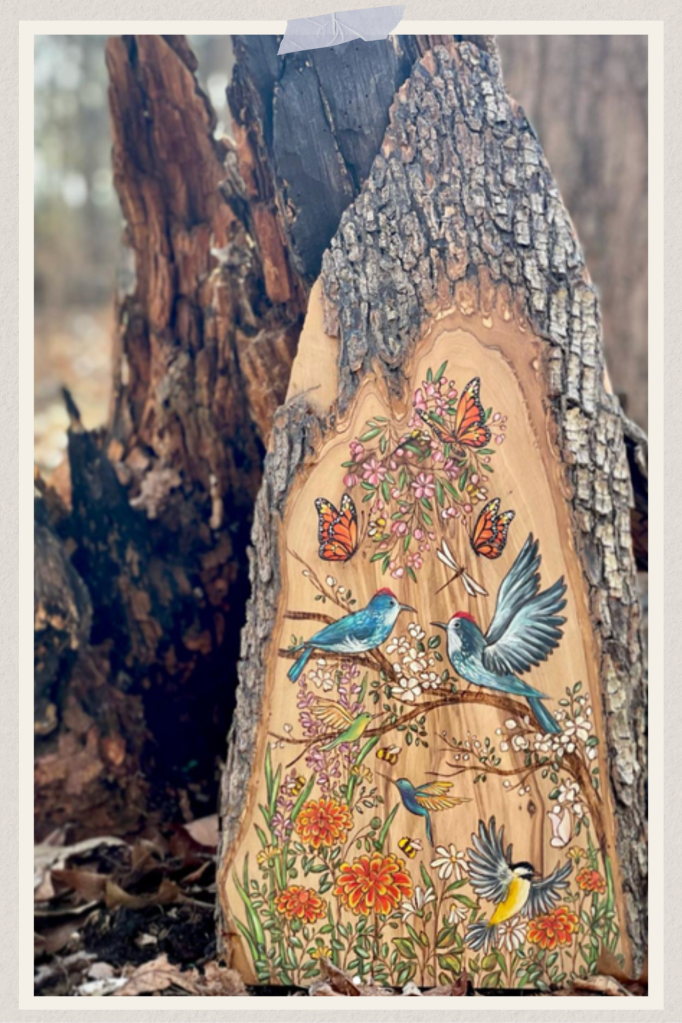
In the world of art, every piece tells a story, and as a woodburning artist, you transform raw materials into heartfelt expressions of individuality. Each custom design inquiry is not just a request; it is an opportunity to collaborate and create something truly unique that resonates with the client’s vision.
How do you approach custom design inquiries from clients?
When Myra receives custom design inquiries from clients, her first step is to gather comprehensive details about their preferences. This includes the desired size, budget, overall aesthetic, colour choices, and the message they wish to convey. Some clients provide a clear vision of what they want, while others invite her creative suggestions. She begins the process by sketching various design concepts on paper and engage in a collaborative dialogue with the client until they finalize a design that meets their expectations. Once Myra and the client have agreed on a concept, she transfers the sketch onto wood and shares an image for further feedback.
Throughout the entire process—whether it is during the burning or painting stages—Myra continues to send updates and images for approval before applying the final seal. Her approach ensures that each client feels involved in the creative process.
Can you share some insights on how you manage the business side of your art studio?
Myra establishes clear goals regarding the number of markets, workshops, and custom projects she can handle each month. To effectively manage her time and resources, Myra plans two months ahead to determine how much work she needs to complete and how many events she can organize. This allows her to use the previous month as a preparation period. Myra also acquired basic Excel skills to monitor her expenses and profits, which helps her to stay aligned with her objectives. Much of this knowledge has come from self-education; through trial and error, Myra developed strategies for marketing, invoicing, budgeting, and ensuring the sustainability of her business.
What are your future goals for Myra’s Art Studio?
Aside from balancing Myra’s Art Studio alongside Ode to Tallow skincare, Myra will continue to expand moreso by further developing her workshop offerings. She is eager to continue hosting in-person workshops and to incorporate online courses into her business model. There is a significant interest in learning this art form, and Myra aspires to make these opportunities accessible to as many people as possible. Furthermore, she looks forward to creating large-scale pieces, as they provide the greatest fulfillment for her creatively.
Are there any new techniques or projects you’re excited to explore in the coming months, or years?
Myra shares that she does have an exciting art-related writing project on the horizon, which she looks forward to announcing later this year! In addition to this, she sincerely appreciates the chance to continue developing her community artist platform.
—
To learn more about Myra Farooq and her work at Myra’s Art Studio, I invite you to explore her services, online store, and discover workshops at myrasartstudio.com.
Have a story or project you’d like to talk about? Let’s connect!
HRBN Life Stories is a platform dedicated to sharing inspiring dialogue that reflects personal and communal growth—much like seasonal blooms that signify new beginnings and resilience. We focus on fostering local conversations that connect individuals through shared experiences and narratives within their communities.
Our audience includes gardening enthusiasts, artists and writers, community members seeking connection, and anyone looking for inspiration in their daily lives. We encourage everyone to join us in this journey—whether by sharing their own stories or participating in our community discussions—to help us grow this vibrant tapestry of inspiration together! Drop us a line here.

Special thanks to the team at Studio 89! Studio 89 is a hub encouraging community dialogue, interculturalism, artistic expression, and conscious consumerism. Their social enterprise aims to benefit humans, animals, and the planet. Learn more at studio89.org.
 HRBN Life Stories