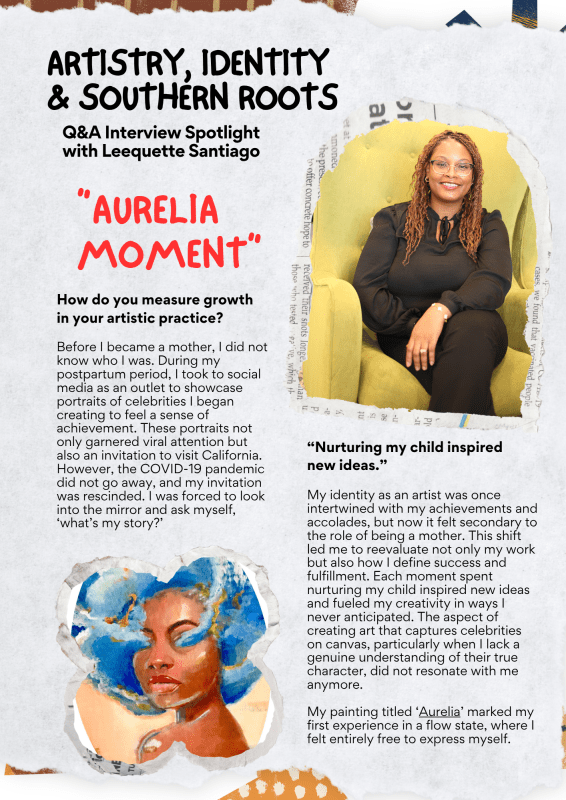
HRBN Life Stories speak with Oshawa, ON resident, Leequette Santiago, whose artistic journey has been shaped by her Southern heritage and the rich tapestry of experiences that come from her familial ties. In her art, Leequette captures the essence of these cherished memories, translating them into visual narratives that resonate with viewers on a personal level. Each piece reflects not only her individual experiences but also the collective stories of her family, emphasizing the importance of connection and belonging.
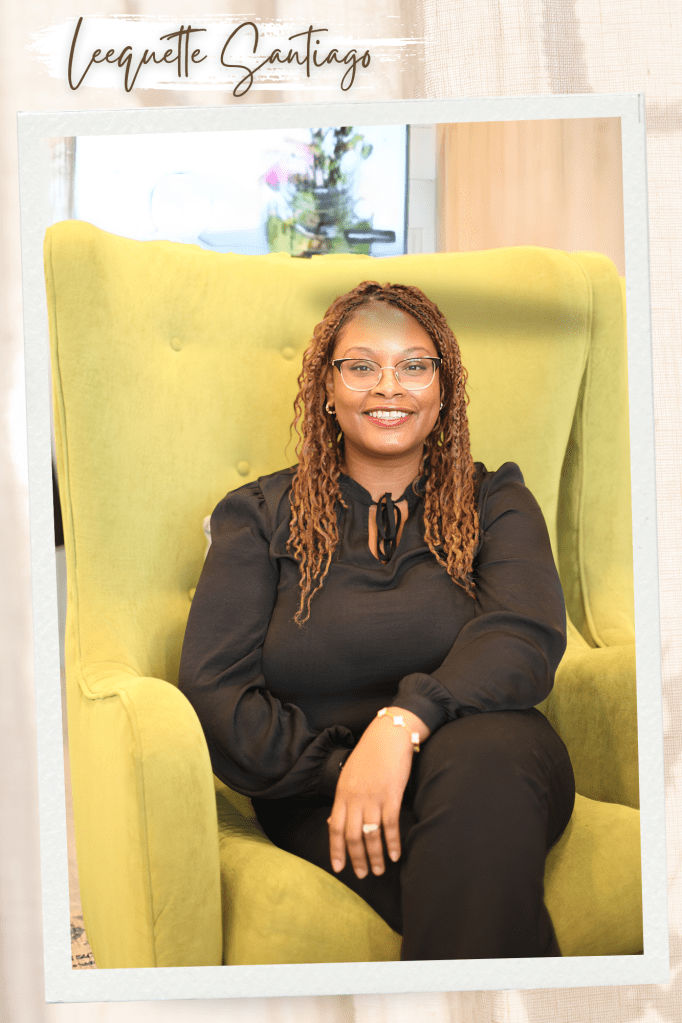
At the core of Leequette’s artistry lies an appreciation for her family bonds. These relationships provide a solid foundation that fuels her creative exploration. The love and encouragement she receives from her family empower her to express herself authentically through various mediums. This support system is essential in navigating the complexities of being an artist, enabling Leequette to delve into personal narratives while inviting others to reflect on their own experiences.
Through Leequette’s work, we witness a beautiful interplay between memory and artistry—a celebration of Southern roots and familial love that invites audiences into a world rich with emotion and authenticity. As she continues to evolve as an artist, Leequette remains committed to honoring these values that define not only her art but also her identity.
In this interview, Leequette also delves into the subject of art playing a crucial role in fostering community connections, particularly when addressing sensitive issues such as mental health stigma within the black community. By utilizing art as a medium for expression, Leequette aims to create a safe space for dialogue and understanding.
Can you share your journey as an artist? What inspired you to pursue a career in visual arts?
From a very young age, my passion for art was evident. At just four years old, I began creating what I considered masterpieces on the walls of my mom’s living room. Recognizing my enthusiasm and talent, she gifted me a sketchbook, which became my sanctuary. I would immerse myself in drawing for hours on end, exploring my creativity without restraint.
As I progressed through school, my love for doodling remained a constant companion. It was during this time that a pivotal moment occurred; a friend noticed my doodles and encouraged me to take on a project that would change the course of my artistic journey. She commissioned me to create a mural that represented her daughters. This opportunity allowed me to dedicate countless hours after work to painting in her spacious basement, further honing my skills and deepening my commitment to art.
Following this experience, I made the decision to continue practicing and eventually secured my first teaching position at Michaels. Teaching not only allowed me to inspire creativity in my students but also facilitated my own growth as an artist. During this time, I was simultaneously pursuing an education in Pediatric Health Administration, which has greatly enriched my perspective and skill set. It’s challenging to articulate this precisely, but my schooling also empowered me to approach my artistic endeavours with a newfound confidence.
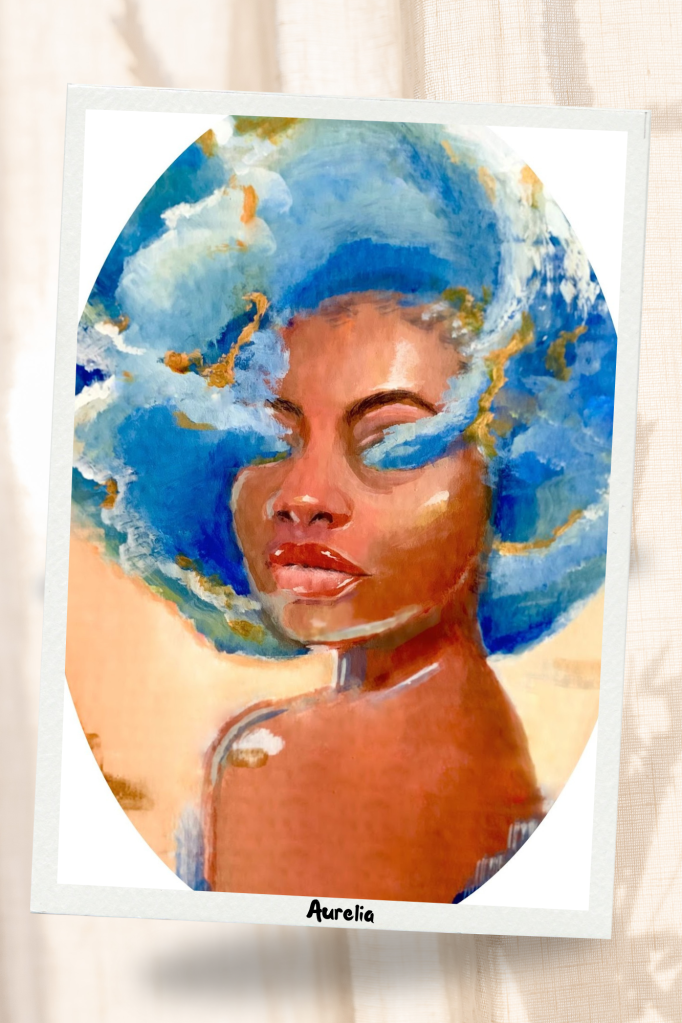
“Aurelia” Moment
Shortly after starting this new chapter in my professional life in Pediatric Health Administration, I was to become a new mom. Just as I was adjusting to motherhood, the COVID-19 pandemic struck. I felt alone in my new mom experience. Being away from loved ones made it challenging to share the joys and struggles that come with motherhood. This emotional distance left me feeling disconnected not only from my family but also from myself. I grappled with postpartum identity issues. I found myself questioning who I was outside of being a mother, which led to feelings of confusion and uncertainty about my place in the world. My focus shifted entirely to this new life, and everything I had done before felt insignificant compared to the magnitude of bringing a child into the world. This dual experience of isolation and identity loss prompted me to explore these themes through my art – I needed an outlet.
Before I became a mother, I did not know who I was. During my postpartum period, I took to social media as an outlet to showcase portraits of celebrities I began creating to feel a sense of achievement. These portraits not only garnered viral attention but also an invitation to visit California. However, the COVID-19 pandemic did not go away, and my invitation was rescinded. I was forced to look into the mirror and ask myself, ‘what’s my story?’ My identity as an artist was once intertwined with my achievements and accolades, but now it felt secondary to the role of being a mother. This shift led me to reevaluate not only my work but also how I define success and fulfillment. Each moment spent nurturing my child inspired new ideas and fueled my creativity in ways I never anticipated. The aspect of creating art that captures celebrities on canvas, particularly when I lack a genuine understanding of their true character, did not resonate with me anymore.
My painting titled ‘Aurelia’ marked my first experience in a flow state, where I felt entirely free to express myself.
Guided by the Love of Family
A significant source of inspiration for my artwork comes from my growing family at home. As a mother to children with autism, I have learned to appreciate the unique ways they communicate. Although they may not speak much, their ability to express themselves is clear. This experience has completely reframed my perspective on communication, highlighting the power of body language.
My paintings have undergone significant transformation because of this journey. I have integrated my art studies with insights gained from my children’s therapy sessions. This blending of knowledge has enriched my artistic expression and allowed me to convey deeper meanings in my work. Moreover, my children also enjoy creating art, which adds an element of joy to our time together. They paint alongside me, fostering a shared creative experience that strengthens our bond.
My husband has seen me through it all. Ultimately, this journey has not only been about creating art but also about self-discovery. During times when I faced feelings of loneliness and identity crises, he offered a safe space for me to express these emotions without judgment. Instead of shying away from these difficult feelings, he encouraged me to confront them head-on. His encouragement has helped me navigate the intricate balance between motherhood and artistic expression, ultimately enriching both aspects of my life.
Appreciated Accomplishments
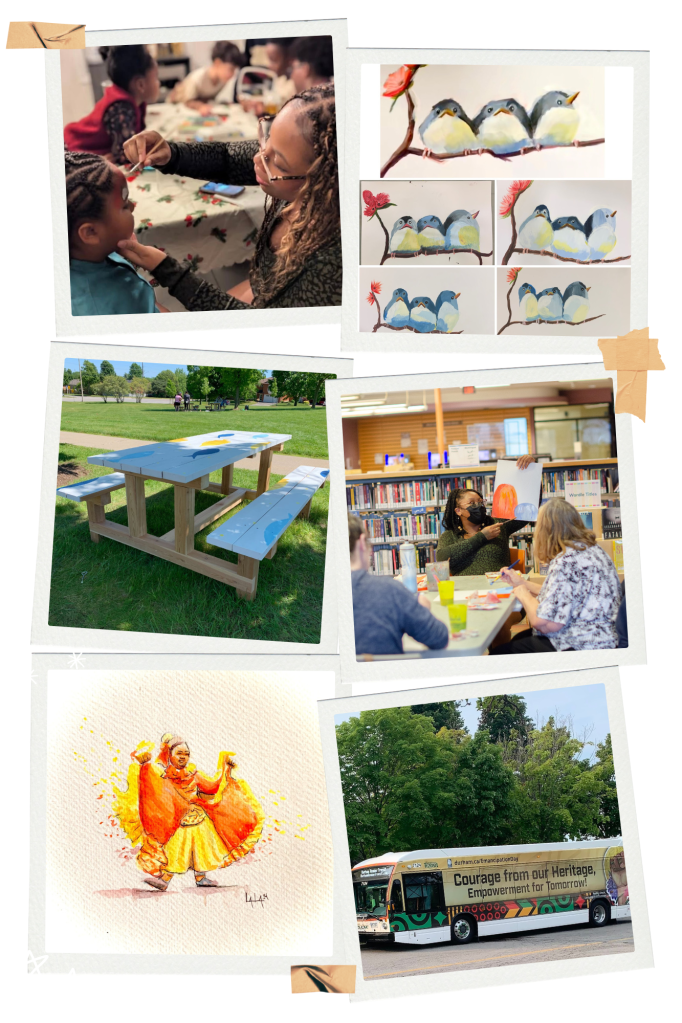
Over the course of a year, I dedicated myself to relentless practice and exploration, which allowed me to discover my unique artistic style. This journey culminated in my first public art commission in 2020, where I created a banner for Lakeview Oshawa.
A significant turning point in my career occurred when I was honored with the Oshawa Culture Counts Emerging Artist of the Year Award in 2021. This accolade opened doors to professional collaborations that were previously beyond my reach. Following this recognition, I secured a teaching contract with the Oshawa Public Libraries. My visibility increased dramatically after a set of birds I taught went viral, further establishing my presence in the art community.
Motivated by my newfound confidence, I embarked on a self-directed study of art history and the narratives of artists who inspired me. This deep dive into their stories fueled my desire to participate in gallery calls, despite facing numerous rejections. Each setback drove me to improve my storytelling abilities within my artwork. As a result, I developed more structured and thoughtful processes that ultimately led to winning two additional awards during this period: The Robert McLaughlin Gallery Award for both 2023 and 2024.
I have been fortunate enough to create public art for various organizations, including the Regional Municipality of Durham and the City of Oshawa. Additionally, I had the privilege of being featured in a campaign for Pampers as a mother of two children, with another on the way. This experience not only highlighted my role as an artist but also as a parent navigating both personal and professional realms.
As an artist with roots in the Southern United States, could you share which specific region you hail from? Furthermore, how do you feel that your Southern heritage has influenced your artistic vision and creative expression?
As an artist, my journey is deeply intertwined with the values that I hold dear.
I am from Miami, Florida with roots in Alabama. The south has a heavy presence in my work, largely due to my ongoing communication with family back home. Our conversations often revolve around summers spent at my aunt’s house, evoking warm and nostalgic memories. These reflections inspire me creatively; when I experience such emotions, I feel compelled to translate them into my art.
I cherish my familial bonds, which provide me with a strong foundation and support system. The love and encouragement from my family inspire me to explore my creativity and express myself authentically through my art.
As I observe your artwork, two pieces stand out and instantly intrigue me: “Smells Like Outside” and “First Comes Rain.”
I observe “Smells Like Outside,” as not just a title, but an invitation to explore the intersection of memory, family heritage, and the sensory experiences that shape our understanding of nature. This piece of artwork evokes memories of my early years in Jamaica, where I spent countless days playing outdoors with my siblings and friends—often barefoot. I perceive the purity and spontaneity characteristic of childhood and this piece highlights for me, how we expressed our feelings through play, discovering happiness in simple pastimes. My childhood experience is truly invigorating to witness in your artwork.
“First Comes Rain” is a tapestry of deep emotions and symbolic meanings that captures an intimate moment between a mother and child. The emotional impact of the work stems from its depiction of maternal love, inviting me to reflect on my own experiences with motherhood, where self renewal and personal growth have been essential components of nurturing. As a mother, I engaged with my own feelings about family bonds while appreciating the nature of this artistic piece, and I’m reminded of an old African Proverb that says” Love like rain, does not choose the grass on which it falls.”
What specific experiences or events from your childhood, as well as your current role as a mother, have influenced your artistic vision?
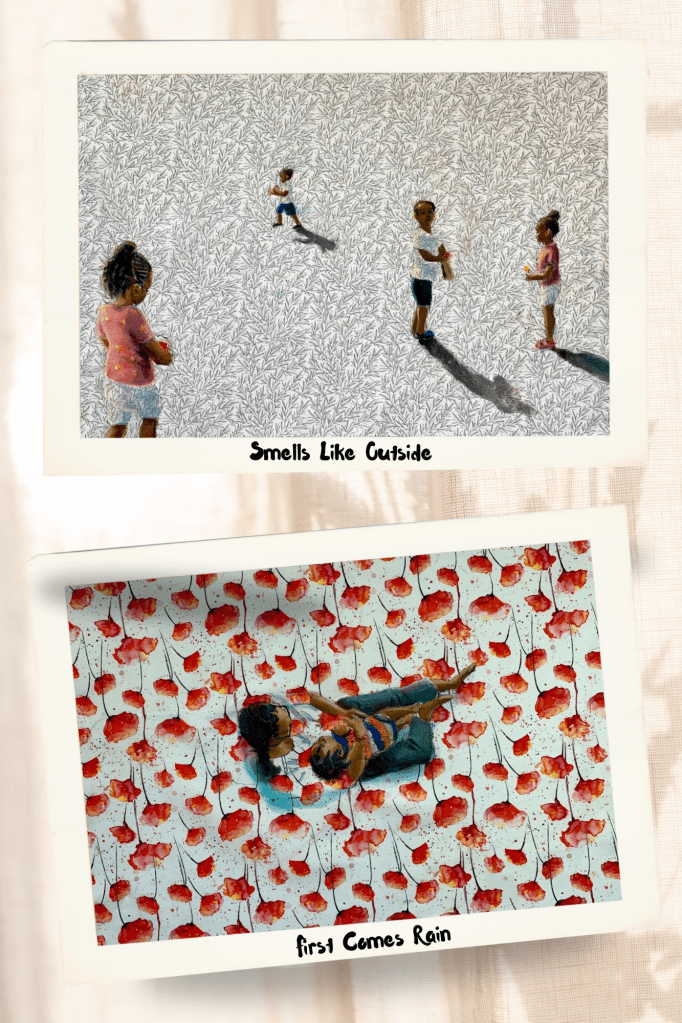
“Smells Like Outside” is a direct phrase often spoken by my grandmother and other family members.
Growing up in the South, there was a common practice of being told to shower immediately after returning indoors from playing outside. This ritual was often accompanied by an unspoken understanding of the odours that clung to us after a day spent under the sun. While I personally never perceived these smells as unpleasant during my childhood, an experience at a park with my husband brought this concept into sharp focus.
On a particularly warm day, as we were gathering our belongings to leave the park, I smelled a foul odour that caught my attention. I asked, “What is that?!” The source of this smell turned out to be exuding from the children who had been playing outside, including our own. In that moment, it dawned on me – MY GOODNESS – this was the very essence of what I had been shielded from in my youth. This realization hit me like a ton of bricks; it was a full-circle moment that connected my past experiences with the present.
The piece “Smells Like Outside” encapsulates not just the physical scent but also the emotional resonance tied to memories of carefree days spent outdoors—a reminder of how nature’s fragrances can evoke deep-seated feelings and reflections on growth and nostalgia.
I experienced an intense emotional response while attempting to capture an image that inspired my piece, “First Comes Rain.” The moment was intended to be lighthearted; I had positioned my sister with my camera to take a fun picture of me and my son. However, I encountered unexpected resistance from my son, who was clearly not in the mood for a photo session. Through his tears, I found myself pleading with him to “smile for the camera.”
We did not get the shot, but once the initial chaos subsided, it felt as though we were experiencing the calm after a storm. The atmosphere shifted dramatically; everything became peaceful and relaxing, to the point where we nearly drifted off to sleep. In that serene moment, I sensed a deep connection with my son. It reminded me of the essence of maternal love—how our children can evoke such strong emotions within us and how our role is not to control or demand from them but rather to guide them through their experiences.
This experience has not only inspired my work but has also reinforced the importance of connection and understanding in parenting. It serves as a reminder that creativity often stems from genuine moments shared with loved ones.
Your work often explores spirituality and familial dynamics. Can you elaborate on how these themes manifest in your art?
Absolutely! Throughout my life, I have encountered moments that defy explanation – I know it was God. When I create, I carefully consider whether my work aligns with what I represent.
My artwork titled “Uninvited,” is a bit controversial. In the creation of this piece, my family once again, plays the unintentional models for the artwork, with my husband capturing a candid moment that inspired the piece. My husband shared with me all the photographs he took at a family gathering, and one in particular caught my attention—“Wait, what’s that one?” I asked. After he sent it to me, I decided to “fix” it to my liking.
This candid moment, captured in a photograph by my husband, became the basis for the artwork “Uninvited,” where I sought to explore themes of spirituality, my stance on “churchy folks,” and experiences of exclusion within the church. I appreciate the inspiration and community that church can provide, but I believe it is crucial for individuals to take time to cultivate their own personal relationship with God. This relationship should not be confined by rigid rules or dogmas that often accompany institutionalized faith. I firmly believe that we can call on God in any circumstance and surrender our burdens, trusting that God is always present with us.
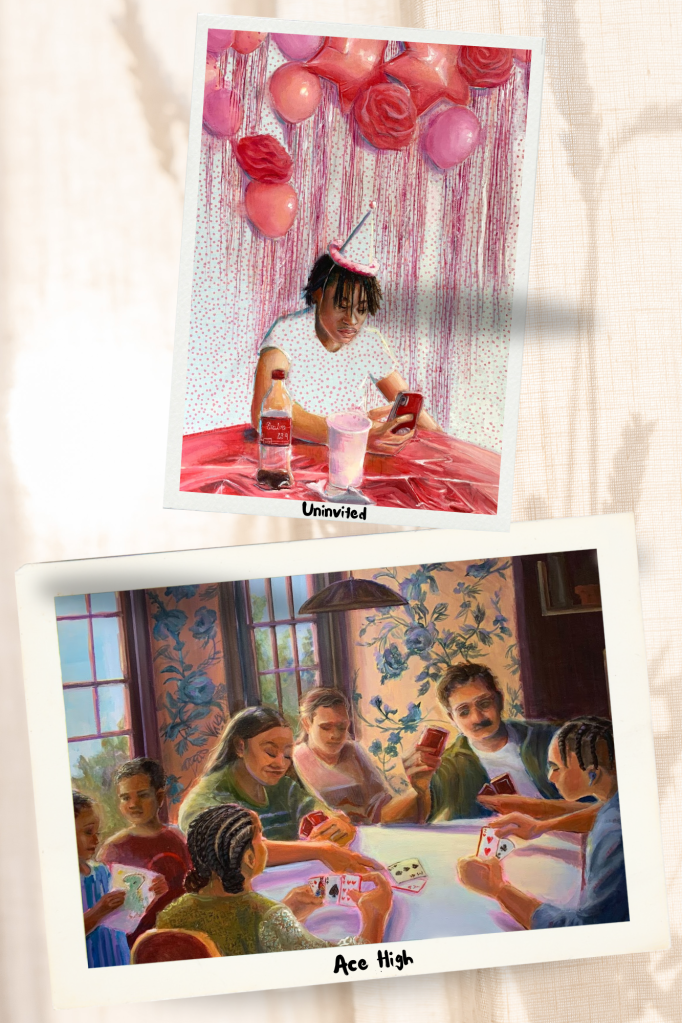
“Ace High” is a heartfelt tribute to my late stepfather, capturing the spirit of our family’s game nights and the love that we shared with him.
My family gatherings are lively; we often have game nights that can get quite chaotic. At times, there can be around 13 people in my apartment, all shouting things like “He CHEATED!” I get to capture genuine moments of authenticity among my loved ones in this chaotic but lively atmosphere.
What traditional mediums and textiles do you prefer to work with, and why do they resonate with you?
I like to work with thread, beads, fabric, and acrylics. In high school, I enrolled in a fashion class, and my first creative design was a purse that I was so proud of! The purse featured my own unique design crafted with some thread, and it was reversible. This was the moment I realized my genuine interest in sewing: I really liked to sew. Throughout my subsequent sewing projects, things just seemed to unravel both literally and figuratively.
My full sewing kit has always been a source of inspiration; each time I open it, it brings back memories of opening a cookie tin in my family home growing up—anticipating cookies only to find it filled with threads and pins instead.
Recently, I’ve expanded my range of artistic skills by incorporating beads into my projects after learning about their significance in African art. This new element not only enhances my designs but also deepens my appreciation for the cultural stories behind the materials I use.
The patterned fabric is something I was drawn to after trying to recreate patterns with paint in my piece “Ace High.” It felt like a gravitational pull, drawing me in with its vibrant designs and textures. You see, my mom always has the most beautiful, patterned sheets, and the familiarity of those patterns resonates deeply with me. Patterned fabrics feel like home.
The use of acrylics aligns with my artistic identity. My choice is practical as well; I have toddlers who run wild, making oils less suitable for my current lifestyle. Additionally, I consciously avoid using cadmium and cobalt pigments in my art to prioritize safety for myself and my family.
The combination of these mediums allows me to explore themes related to traditional femininity. I acknowledge the traditional role of women; however, I find it ironic to incorporate thread into my artwork while ignoring the frayed threads of my own ripped couch.
How do you approach the integration of different materials in your artwork?
My method involves careful planning, understanding material interactions, and striving for delicacy in execution to achieve a harmonious integration of different materials in my artwork.
Given that fabric is still relatively new to me, I prioritize planning as a crucial step in my creative process. Through my experimentation, I’ve discovered that while fabric pairs well with thread, I am particularly interested in exploring its compatibility with acrylics and beads. This exploration allows me to understand the unique properties of each material and how they can complement one another – creating artworks that are both cohesive and striking.
Can you discuss any collaborative projects or initiatives you’ve been involved in that aim to uplift or support the community?
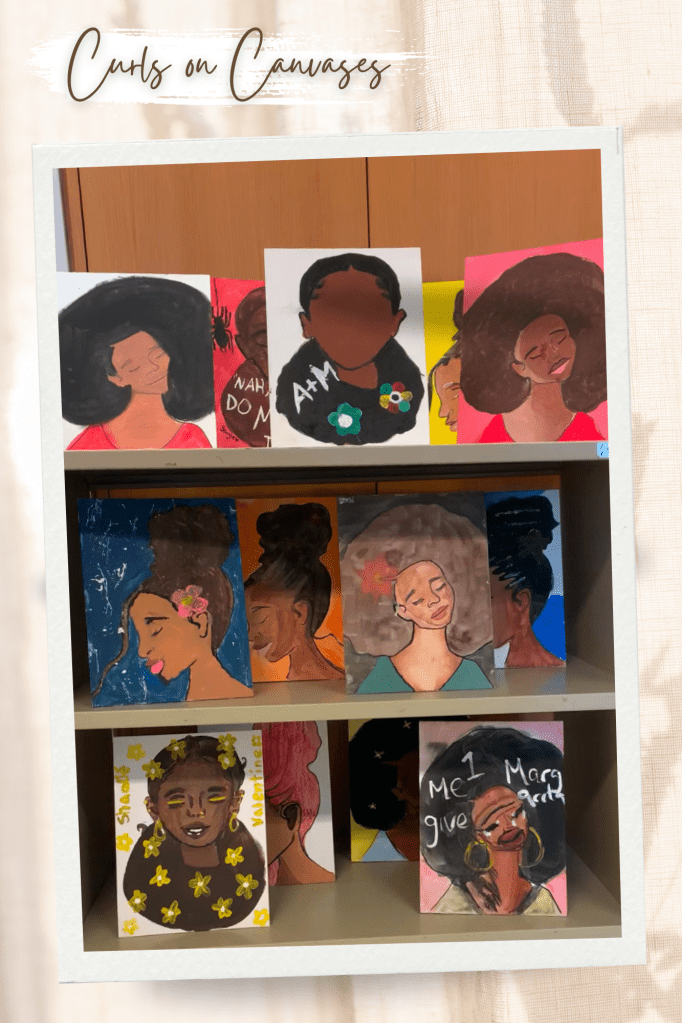
One of the most impactful collaborations I participated in was with the Congress of Black Women Canada during their event titled “Black Girls Empowered.” In this initiative, I facilitated a workshop called “Curls and Canvases.” This workshop focused on discussing our hair journeys, particularly emphasizing the cultural significance of hair within the Black community.
During the session, we engaged in meaningful conversations about experiences such as postpartum hair loss. Many participants shared how they could relate to these experiences because they had seen similar challenges faced by their mothers after childbirth. This sharing created a supportive environment where we could uplift one another through our stories.
The event featured an inspiring speaker who delivered a powerful message that resonated deeply with everyone present. The entire day was filled with motivation and encouragement, reinforcing the importance of community support and empowerment.
In addition to my work with the Congress of Black Women Canada, I have conducted artist talks aimed at inspiring individuals to pursue their passions fearlessly. Recently, I had the privilege of speaking at Afiwi Centre, where I discussed my artistic processes and shared valuable resources that can help aspiring artists navigate their creative journeys. These talks are designed not only to share knowledge but also to foster a sense of community among artists and encourage them to embrace their unique paths.
Through these collaborative projects and initiatives, I have witnessed firsthand the power of community engagement in uplifting individuals and fostering creativity. It is an amazing feeling to contribute to spaces where people feel empowered to express themselves and connect with others who share similar experiences.
How do you see art playing a role in fostering community connections?
Art plays a crucial role in fostering community connections, particularly when addressing sensitive issues such as mental health stigma within the Black community. I want to break the mental health stigma surrounding the black community, as it often discourages individuals from seeking help, leading to isolation and further complications. By utilizing art as a medium for expression, we can create a safe space for dialogue and understanding.
Before I learned of my children’s diagnosis of Autism, I was navigating postpartum challenges. During this time, I received unhelpful advice that lacked empathy and understanding, suggesting that I simply needed to make my children “act right,” but I knew there was something more behind their behaviour. This experience highlighted the need for deeper conversations about mental health rather than superficial solutions. It became evident that prioritizing my own mental health was essential not only for my well-being but also for recognizing the needs of my children. Being the “strong black woman” had taken a toll mentally and that manifests physically.
I am fortunate to have a great husband and family, but I realize that many individuals do not have such a network. This realization fueled my desire to use art as a tool for normalizing the conversation around mental health. I want to share my experiences and in turn inspire others to share theirs so that we can build something real. Through creative expression—whether it be visual arts, music, or writing—we can share our stories and experiences.
When individuals see their own experiences reflected in artistic expressions, it validates their feelings and encourages them to seek help without fear of judgment. This collective sharing creates a sense of belonging and connection among community members, and by sharing, we build something real—a supportive community that values mental well-being.
How do you measure growth in your artistic practice? Are there specific milestones that stand out to you?
Awards are impressive, collaborations are extraordinary, but I cannot tie these achievements to my personal worth. Doing so would lead me to chase accolades or partnerships for their own sake. Although they certainly enhance my credentials, my true measure of success lies in the positive impact I can have on others’ lives. When my work resonates with people, that is where I find genuine success.
A notable recent milestone occurred when a group of 8th graders contacted me to participate in their Black Business Project. I was taken aback, filled with honour, and moved to tears. This experience has motivated me to invest in my education further and explore ways to create financial wealth, while being of service to others. Recently, I graduated from the Ogotawa Black Entrepreneur Program, which provided valuable business insights on how I can achieve this goal.
When the students contacted me, my first thought was a wish that they recognized my work—not just my business, but genuinely valued my creations! Translating my ideas into tangible creations now holds immense significance for me.
It’s hard to believe that it has been almost exactly five years since we first met when I commissioned you to create artwork for my poem “Soulflower.” Art brought us together initially, but our bond also flourished through conversations sparked by my culinary creations. I take great pride in witnessing your artistic evolution and the strides you’ve made over the years! It is a privilege to share your story, and I eagerly anticipate celebrating all the achievements that await you in the future!
As you look ahead, what are your aspirations for the direction your art will take in the coming years?
I envision myself moving into new mediums while continuing to hone the ones I currently use. I see a future filled with shows that not only showcase my work but also foster community engagement.
On the business side of things, I envision an elevation in my financial success as I develop my brand and reach a wider audience through Santiago Studios. This growth will enable me to invest more in my art practice, allowing for greater experimentation and innovation. I plan to continue to explore various avenues for monetization, including online sales, workshops, and collaborations.
I anticipate that my services will become increasingly diverse, offering unique experiences that are both crazy and fun. This could include interactive installations or immersive workshops that invite participants into the creative process. By expanding what I offer, I hope to engage a broader audience and inspire others through art.
What advice would you give to young artists who are trying to find their voice in the art world?
Persistence is key in the art world. One of the most crucial pieces of advice I can give to young artists is to continuously experiment with different styles, mediums, and techniques. Develop a routine of creating, that allows you to discover what resonates with you personally and what communicates your ideas effectively. Don’t be afraid to step outside your comfort zone; sometimes the most mind-blowing discoveries come from trying something new.
There will be challenges, rejections, and moments of self-doubt, but it’s essential to remain committed to your artistic journey. Remember that many successful artists faced numerous setbacks before achieving recognition. Embrace failures as learning opportunities rather than roadblocks.
Education plays a vital role in developing as an artist. Consider taking classes or workshops that can provide you with valuable insights into art theory, technique, and history. Online courses can be particularly beneficial as they allow flexibility while offering structured learning experiences. For instance, I have developed an online course, “Acrylics Unlocked,” aimed at beginner artists that covers fundamental structures applicable across various art forms.
Ultimately, the best way to find your voice is simply to start creating art regularly and reflect on your progress over time. Each piece you create contributes to your growth as an artist and helps clarify your unique style and perspective.
How important is it for you as an artist to stay connected with your cultural roots while exploring new creative avenues?
As an artist, maintaining a connection to my cultural roots is incredibly important to me. I believe that staying grounded in my heritage helps me preserve my identity and ensures that I do not lose myself in the process of exploring new creative avenues. While I find value in experimenting with different styles and ideas, I recognize that everyone has a unique way of expressing themselves, shaped by their background and experiences – their authenticity.
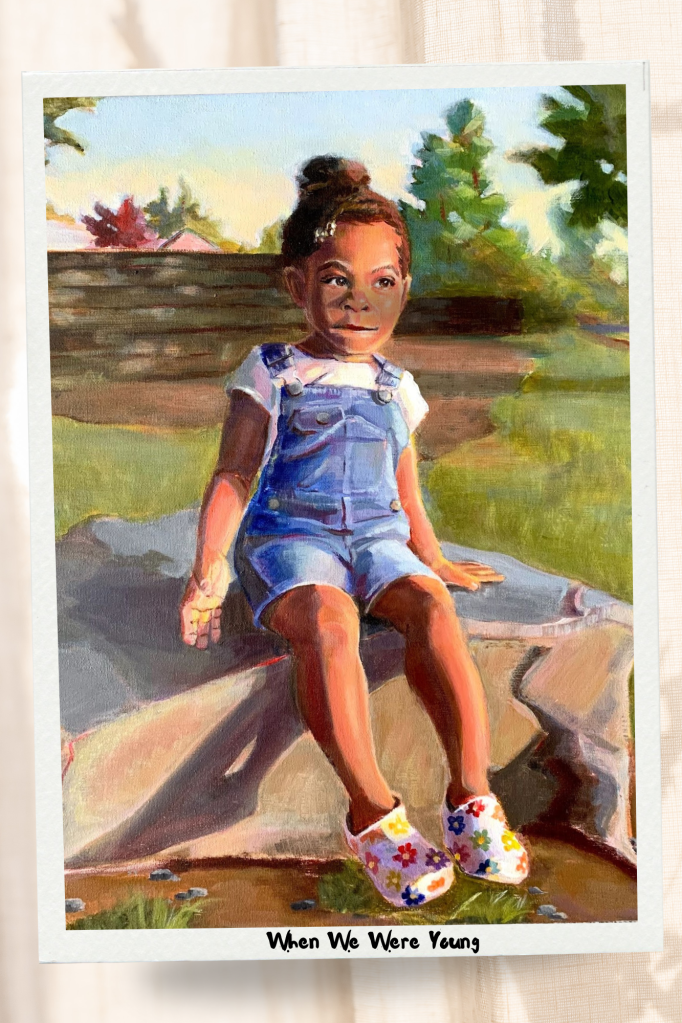
As I continue to create, I find myself increasingly reflecting on my heritage and the experiences of growing up in the South. There are common threads that weave through these influences, enriching my artistic expression and deepening my understanding of family dynamics.
—
To learn more about Leequette Santiago and her work at Santiago Studios, I invite you to explore her services, online store, and discover workshops including “Acrylics Unlocked,” at lalasantiago.com.
Have a story or project you’d like to talk about? Let’s connect!
HRBN Life Stories is a platform dedicated to sharing inspiring dialogue that reflects personal and communal growth—much like seasonal blooms that signify new beginnings and resilience. We focus on fostering local conversations that connect individuals through shared experiences and narratives within their communities.
Our audience includes gardening enthusiasts, artists and writers, community members seeking connection, and anyone looking for inspiration in their daily lives. We encourage everyone to join us in this journey—whether by sharing their own stories or participating in our community discussions—to help us grow this vibrant tapestry of inspiration together! Drop us a line here.

Special thanks to the team at Studio 89! Studio 89 is a hub encouraging community dialogue, interculturalism, artistic expression, and conscious consumerism. Their social enterprise aims to benefit humans, animals, and the planet. Learn more at studio89.org.
 HRBN Life Stories