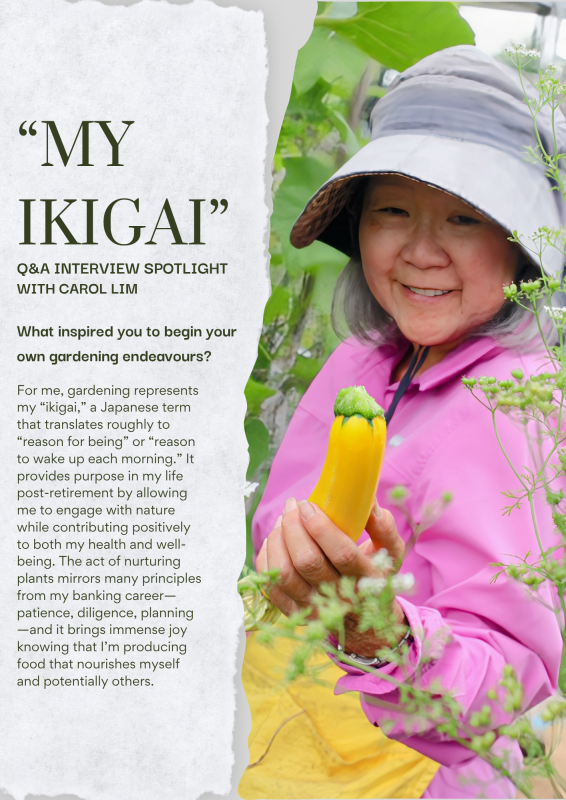
HRBN Life Stories sits in conversation with Carol Lim, a gardener whose work is deeply rooted in community care. Through growing food in the city, Carol helps nurture connection, strengthen food security, and reimagine how communities gather, share, and grow together in Mississauga, Ontario.
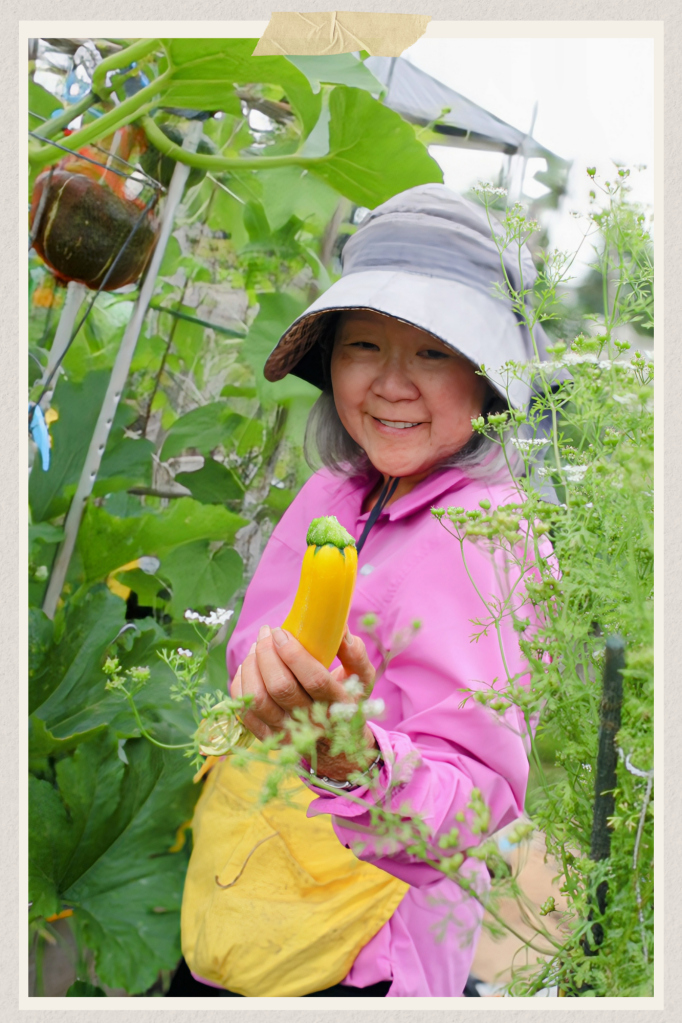
After years in the fast-paced world of finance, Carol Lim felt called toward a different way of living—one rooted in gardening. What began as tending plants became an invitation to slow down, reconnect with nature, and care for her own well-being.
For Carol, gardening holds a deeper meaning. It is her ikigai, a Japanese concept meaning “reason for being.” It brings purpose and joy to each day, offering motivation to rise each morning to tend plants and cultivate community through shared experiences in growing food.
Carol’s journey from finance to cultivation reflects the quiet power of following new callings. Her story unfolds as a turning toward what sustains; through her dedication to community, she has found personal fulfillment while inspiring others to value gardening as a source of connection and care.
Beyond our conversations in cozy cafés for this interview, Carol and I have spent many hours together in Ecosource community gardens. She plays an essential role in the environment that has supported my own growth—through the people around me who encourage personal development, self-acceptance, and a deeper care for the natural world.
Carol is so lovely to know! Join HRBN Life Stories as we step into her story, a reminder that new passions can open pathways to connection, purpose, and renewed ways of living.
Eartha:
Throughout my time with you in the garden, I’ve often heard you say, “I can’t take my knowledge with me when I die; I might as well teach people how to use it.” At 72, what experiences or lessons have you found most meaningful to share with others in the garden?
Carol:
I have learned to not be disheartened by a plant that is not thriving. Plants have a way of telling you what they need, you just have to be observant and responsive to their signals. For example, yellowing leaves mean that a plant is deficient in essential nutrients, such as nitrogen.
The most important lesson though is that it is essential to ‘fix the soil.’ When the soil is healthy – rich in all the necessary nutrients – plants thrive and grow without issues. Even when faced with pests, a healthy plant can endure and often withstand attacks. In fact, pests tend to avoid healthy, robust plants altogether. This principle reflects the concept of survival of the fittest.
Also, know that it does not matter if you’re busy or sick, your plants need regular attention. It is crucial to nurture your plants; they will not grow on their own. I have observed gardeners who are enthusiastic in May as the gardening season begins, but by August, their excitement often wanes when they notice that their plants are unhealthy or failing to grow. This decline in enthusiasm is a direct result of neglect. How frequently did they water their plants? Plants do not consider your busy lifestyle; they simply need consistent care.
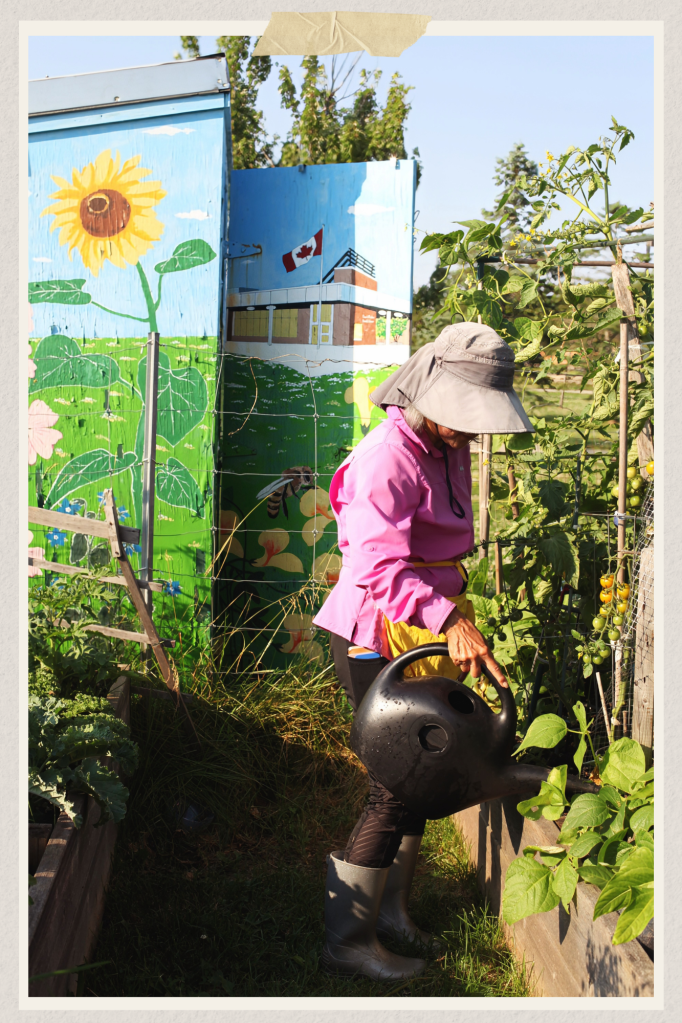
If you have limited free time, then plant selection is important. In situations where you cannot fully commit to the growing season, opt for low-maintenance options such as herbs that require minimal care.
Eartha:
How has being part of a community garden shaped your relationships with others, and what impact has it had on your own sense of well-being?
Carol:
It gives me a chance to learn about other people’s religions, cultures and way of life.
Each gardener has their own unique story, and not all these stories are pleasant. I aim to adopt an empathetic approach, actively listening to their experiences and providing them with a space to express their feelings – give them a chance to vent.
Eartha:
My own journey into gardening began about five years ago, when I stepped into a volunteer role as a Community Garden Cultivator with Ecosource. Through that experience, I learned alongside seasoned gardeners who shared their knowledge of planting, watering, and caring for crops. I’d love to hear about your own path into gardening, and what first drew you to it.
Carol:
I found myself at a bit of a crossroads after I retired in 2017, thinking about how to spend my newfound free time in a way that felt meaningful. I thought about my health, and what it might look like to grow older without purpose or community. In the end, what really stayed with me was the idea of growing my own food. I rented a piece of land known as the Backyard Farm, which became a space for experimentation and growth.
I wouldn’t say I perfected anything, I just kept paying attention. Little by little, I learned what works best for the soil, the plants, and keeping things in balance. Seeing the crops grow stronger each year makes all the effort worthwhile.
Before I retired, around 2016, I began volunteering with Ecosource as a garden cultivator. I was learning new skills, but I was also meeting people who shared the same values around growing food and caring for the land. That experience helped me see how community gardens grow more than food—they grow connection and movement.
One of the most rewarding parts of gardening for me has been sharing what I’ve learned with others who are curious about growing their own food. I enjoy showing people simple techniques and talking about sustainable ways to garden. Not everyone stays committed, and that can be hard to see at times, but I still believe in offering what I know. I remain passionate about helping others cultivate their green thumbs because I believe that gardening can be life-changing, and when people learn to grow food together, it can strengthen the whole community.
“My Ikigai”
For me, gardening represents my ikigai, a Japanese term that translates roughly to “reason for being” or “reason to wake up each morning.” After retirement, it gave me a real sense of purpose. It keeps me connected to nature and supports both my health and my well-being. Caring for plants has a lot in common with my years in banking, it takes patience, attention, and planning. And there’s a deep satisfaction in growing food, knowing it nourishes me and, at times, others as well.
My journey into gardening has been one of constant learning. It’s brought me a sense of purpose, a strong connection to community, and a deep appreciation for growing not just plants, but relationships as well.
Eartha:
Each day in the garden brings its own challenges and rewards. What have been some of the bigger challenges you’ve faced along your gardening journey, and how did you work through them?
Carol:
Gardening is something you’re always learning. Every year brings new challenges, especially with how much the climate is changing. One year you might get frost early in October, and the next it stays warm well into November. I’ve learned you have to pay attention and adapt, covering plants when needed and doing what you can to protect them. That kind of flexibility makes all the difference.
Timing really matters in the garden. Every plant has its own nature, much like people do. Take brassicas, for example, they prefer cooler temperatures, so I plant them in July to give them a good start before the weather cools down.
Then, there’s also what you choose to grow. I always tell people to choose plants that match their personality and the time they can give. When your garden works with your lifestyle, it becomes something you enjoy rather than something you have to keep up with.
Eartha:
You often speak about the importance of soil. How did you learn to read what the soil needs, and what are some of the ways you care for it throughout the season?
Carol:
As the growing season gets underway, taking care of the soil becomes really important. I like to think of soil the same way I think about our own health; if it isn’t being nourished, everything else struggles.
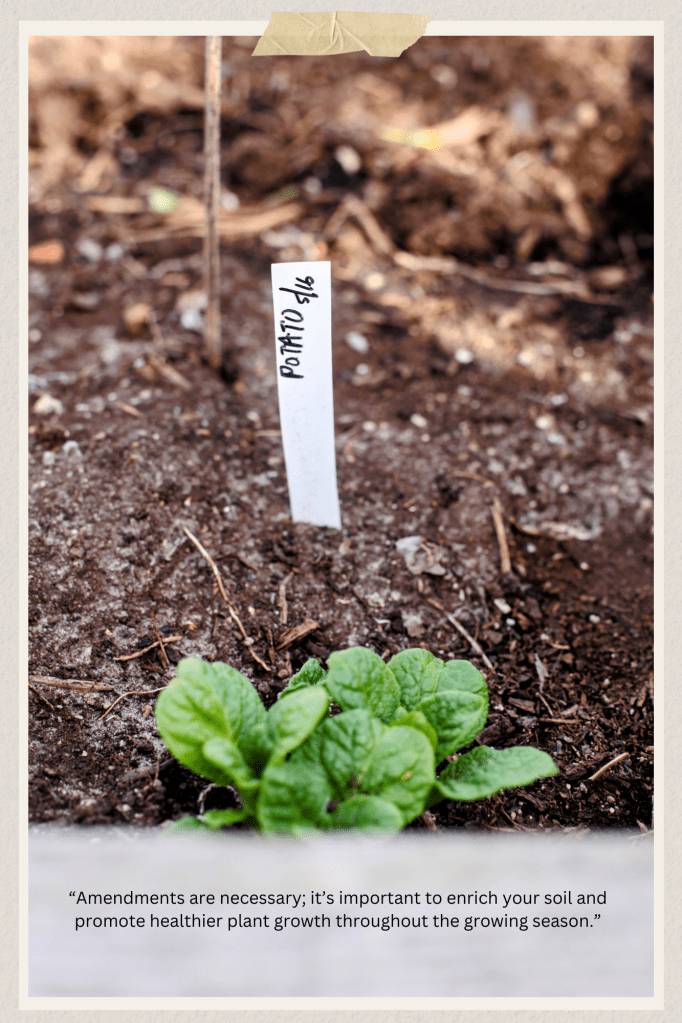
How can you nourish the soil? Throughout the season, the soil needs to be fed. Adding amendments helps keep it healthy and supports stronger plant growth. One of the simplest ways I do this is by using compost I make myself. I grind up food scraps, mix them with water, and pour it right into the soil. I also use a “chop and drop” method—cutting back healthy plants and letting that material return to the soil, either on the surface or lightly worked in.
Plants need different nutrients to thrive, and each type of vegetable has its own preferences. You’ll often hear gardeners talk about nitrogen, phosphorus, and potassium. Those are the basics the soil needs to support growth.
Root vegetables like carrots, beets, and radishes do best with a balanced mix, but phosphorus is especially helpful for developing strong roots.
Leafy greens, things like kale, chard, and lettuce, love nitrogen. That’s one reason I save coffee grounds for my garden. They add organic matter and help boost nitrogen, along with small amounts of phosphorus, potassium, and other minerals like calcium and iron.
Fruiting plants such as tomatoes, peppers, cucumbers, and squash need a good balance of phosphorus and potassium to support flowering and fruit development. Paying attention to what each plant needs, and feeding the soil along the way, makes a real difference.
Eartha:
Let’s pause… Carol’s guidance has shaped how I garden and how I listen, to the soil, and to the spaces where growth begins.
More on Listening to the Soil, with Carol:
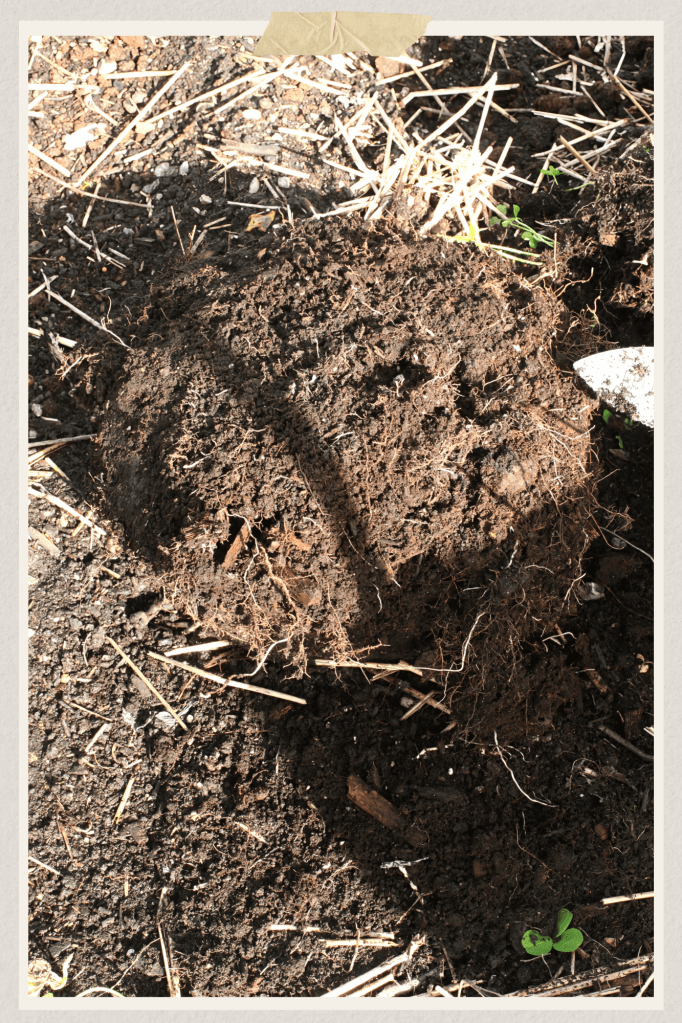
One of the first things I do is check the soil’s density. I use what I call the “water trick.” I dig a small hole, fill it with water, and watch how quickly the soil absorbs it. If the water sits on the surface for a long time, the soil is likely too dense, almost like clay. Seeds can have a hard time pushing through that kind of soil.
I also like to test the soil with my hands. I take a handful, squeeze it, and then see how it breaks apart when I let go. That tells me a lot about what the soil needs.
Soil that’s too compact makes it difficult for roots to grow, while soil that’s too loose can wash away easily and lose nutrients. Finding that balance is key.
Eartha:
After all the care that goes into a growing season, harvesting can feel especially rewarding. Are there certain crops you love growing the most, and what draws you to them?
Carol:
This year brought me a lot of joy in the garden.
I love growing potatoes and sweet potatoes because they stay hidden under the soil. You never quite know what you’re going to find, and every harvest feels like a surprise. This year (2024 Fall harvest), the sweet potatoes especially amazed me. From a small plot, I ended up with nearly a hundred. Digging them up felt like uncovering hidden treasures.
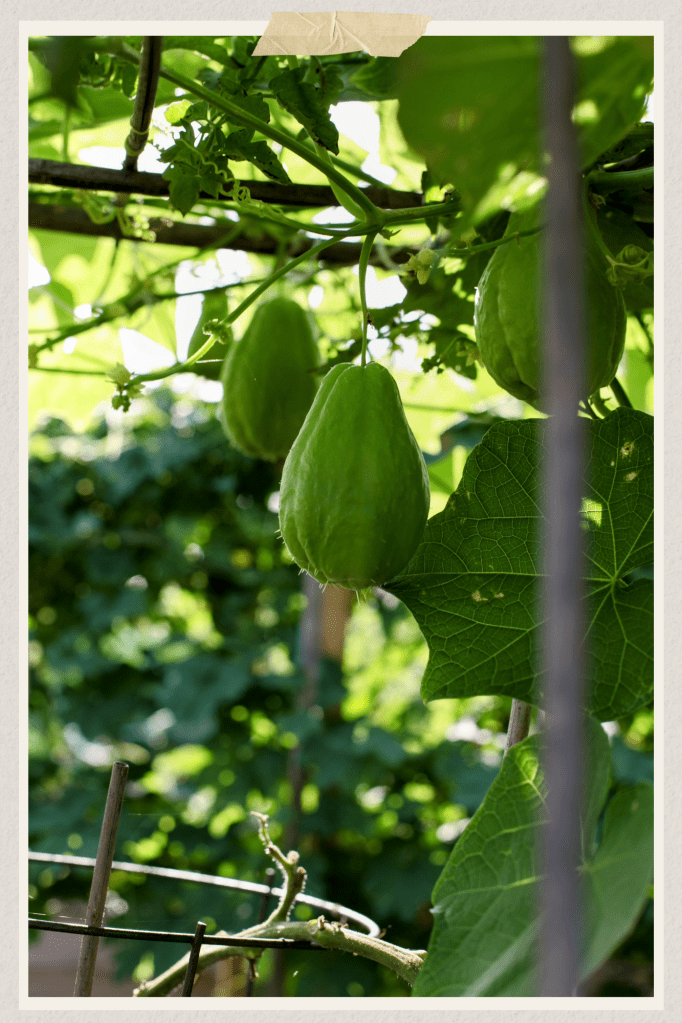
I also had a really good season with chayote. By early November, I had already harvested 66, and there were still more growing.
Eartha:
How do you continue learning and staying curious in the garden?
Carol:
I try to stay curious in the garden. I’m always learning, watching videos, looking things up, and going to workshops when I can. I’m also involved with our local seed library, where I both donate and collect seeds. It’s another way of learning and sharing at the same time.
Gardening teaches you to stay humble. There’s always something new to learn, especially from others. I talk to people from different places who grow in ways I might not be familiar with. You never really know everything, and that’s part of what keeps it interesting.
Eartha:
Beyond your own garden, you’ve dedicated a lot of time to growing food for others. Can you share what that experience has been like for you?
Carol:
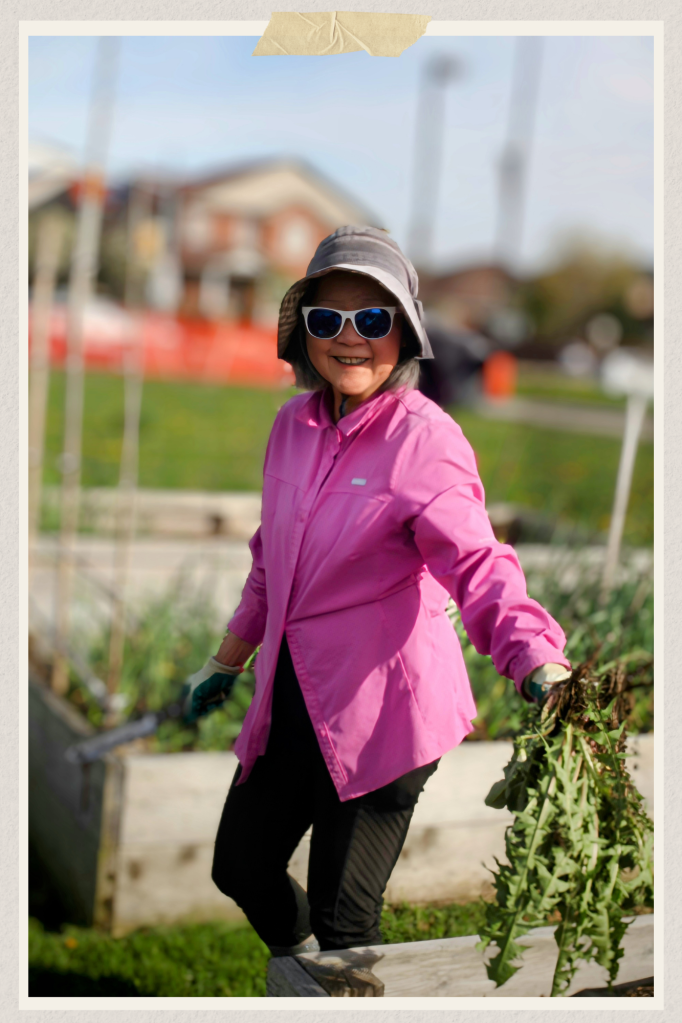
Beyond caring for my own plot, I also volunteer my time to grow and harvest food through Ecosource for local food banks. In 2023, we were able to donate over 12,500 pounds of fresh food, with 477 pounds coming from my community garden space. That really reflects the effort of everyone involved. It’s never just one person.
Being part of that work brings me a deep sense of fulfillment. Knowing the food is reaching people who need it reminds me why I garden in the first place. It feels meaningful, and it feels shared.
Eartha:
Is there a life quote or saying that resonates deeply with you, and why does it hold meaning for you?
Carol:
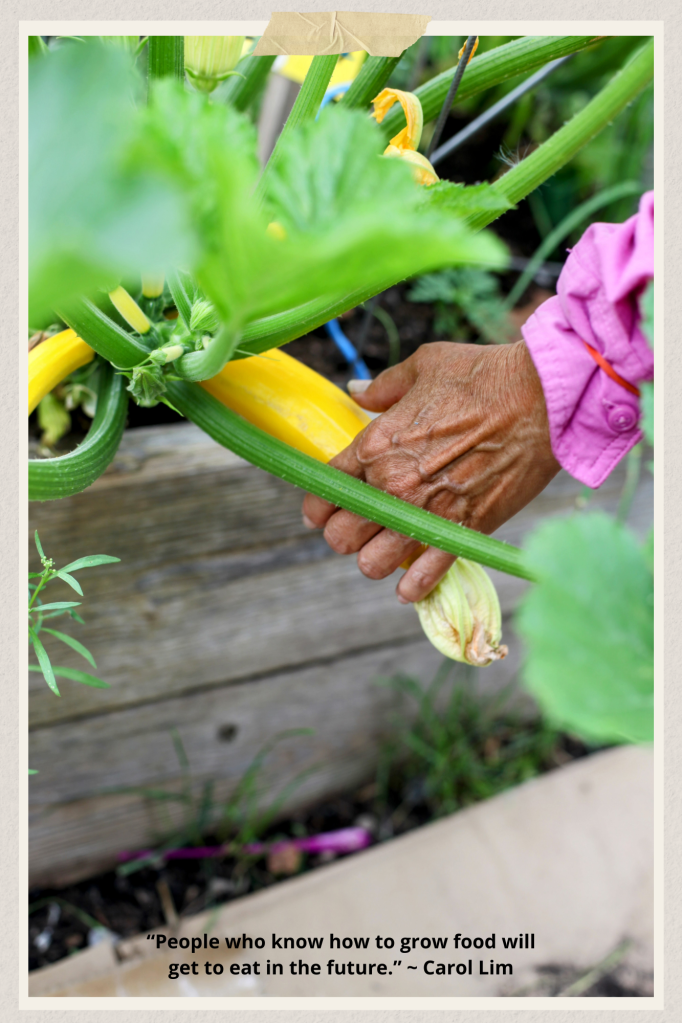
People who know how to grow food will get to eat in the future…
When conventional supply chains break down, access to food becomes fragile. Knowing how to grow your own food gives you a real advantage in uncertain times, and not just for yourself, but for your community. That knowledge builds resilience and helps sustain one another when it matters most.
Communities that can adapt their agricultural practices will be better positioned to face challenges to food security.
Editorial Note
Carol’s responses have been lightly edited for clarity and flow while preserving her voice and meaning.
Share your story. Sit with others’ truths.
HRBN Life Stories is a platform shaped by lived experience and thoughtful exchange. Here, stories are tended with care, so they may root deeply, grow honestly, and be shared freely.
We hold space for voices and conversations that draw people together through lived narrative. Literature and art are woven throughout our stories, honouring creative expression as a way of seeing, reflecting, and connecting more deeply. Each piece invites readers to pause, listen, and engage in dialogue that deepens awareness and care for one another.
At its heart, HRBN Life Stories is guided by the understanding that challenge carries the seed of transformation. Through storytelling, we explore how growth can rise from difficulty, how roots strengthen beneath the surface before new life emerges.
Inspired by Carol’s story? Discover more voices rooted in community, resilience, and purpose.
 HRBN Life Stories